







23 Nov UK Hotels Face Staffing Shortages in 2025
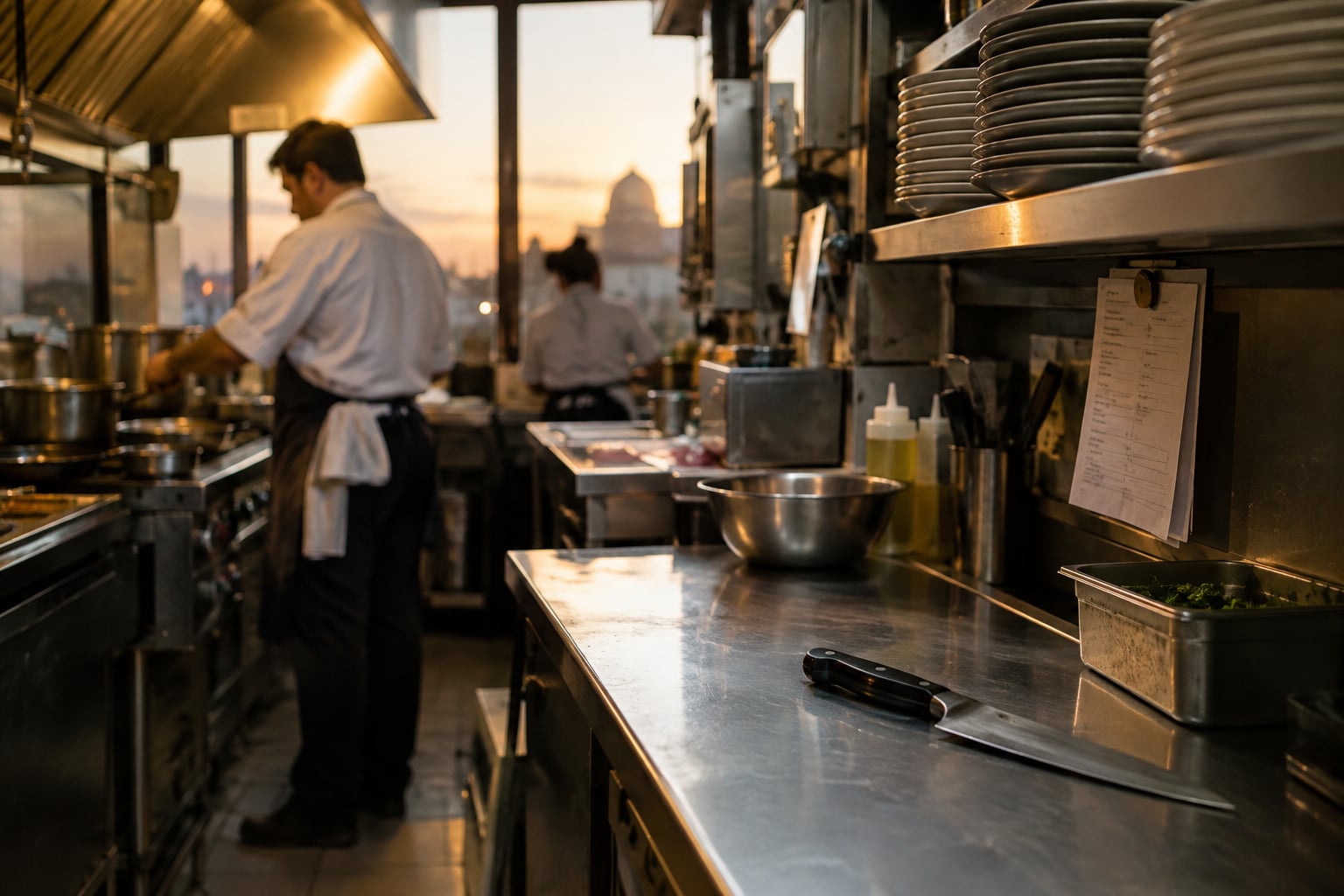
Most hotel kitchens still run on a full brigade. There’s a chef on every station, on every shift. One UK supplier argues that hotels can keep the quality and cut the on-site cooking team by moving the cooking somewhere else. Whether that holds up depends on how well the kitchen and the floor work together.
Key takeaways
- Hotels face kitchen staffing shortages even after raising wages, according to a February 2025 American Hotel & Lodging Association survey.
- A split model moves cooking to a central production kitchen and leaves on-site staff to finish and plate the dish.
- The finishing step is where the model succeeds or fails, and it depends on clear instructions and a shared handoff.
- The only source for the split-kitchen model is a supplier’s own account, so you’ll need to check the claims against your own numbers.
Why hotel kitchens keep running short-handed
A staffing survey from the American Hotel & Lodging Association, published in February 2025, found that 65% of hotels still reported shortages. Those shortages kept going even after hotels raised wages and added benefits.
Pay alone hasn’t closed the gap.
Food and beverage teams tend to respond in one of two ways. They cut the menu or shorten the hours. Or they keep a full brigade and accept that the restaurant loses money. Neither is a good outcome for a property trying to hold guest satisfaction steady.
Pay rises have not solved the hotel kitchen staffing problem, so the question has shifted from who cooks to where the cooking happens.
What a split kitchen actually is
Split kitchen is a model where chefs cook dishes in a central production kitchen. The dishes are then blast-frozen and portioned for the hotel, and the hotel’s staff only finishes and serves them. The writer, Danat Abdrakhmanov, co-founder of the UK supplier Nova Chef, describes it as separating two jobs. Cooking is developing and executing a recipe. Service is finishing the plate and getting it to a guest.
The argument is simple. A traditional brigade does both jobs on site, so labor cost rises with opening hours instead of with the number of meals served. In a split model, the skilled work happens once, under the same chef. The on-site finish takes three to ten minutes, according to the article. Nova Chef supplies chef-made dishes to 60 UK hotels, which finish them front of house.
The handoff is where the team either holds or breaks
The finishing step is the weak point. A frozen dish finished badly is just a bad dish. A note that says follow the instructions on the pack won’t hold up on a busy Saturday with a new starter on shift. The author says the company’s Scan-to-Cook system removes the guesswork. Each pack carries a barcode. The cook scans it, and the station screen names the dish and the appliance to use, such as a combi oven, air fryer or microwave. The program is already set on that appliance, so the cook presses start and plates.
That design is really about teamwork. The chef’s knowledge gets built into the process once, so a server or line cook on a late shift doesn’t have to remember it. The handoff between the production kitchen and the floor only works if both sides agree on what done looks like.
What this means for your own team
Whether or not a split kitchen suits your property, the lesson holds. Labor problems in food and beverage are often handoff problems.
The chef who knows the recipe, the manager who schedules the shift, and the server who delivers the plate all need the same standard. Peak Hospitality works with ownership groups on exactly this kind of operational question, from staffing structure to cost control and guest satisfaction. The first step is usually a plain look at where the handoffs break, not a new piece of equipment. Clear expectations, written down and shared, tend to matter more than the model you pick.
Questions people ask
What is a kitchen brigade?
A kitchen brigade is the traditional team structure in a professional kitchen, with defined roles for each station and a chef in charge. In a hotel, it usually runs on site for every shift. It works, but labor costs follow opening hours.
Does a split kitchen replace chefs?
According to the Nova Chef article, the chefs still develop and cook the dishes. They just do it in a central production kitchen rather than on site. Hotel staff handle the finishing step. Whether this suits a given property depends on its menu, guest expectations and local labor market.
Is the 65% staffing shortage figure reliable?
The figure comes from an American Hotel & Lodging Association survey published in February 2025, as cited in the Nova Chef article. It describes hotels reporting shortages, not a measure of how many positions are open. Check the original survey before you use it in a budget.
If your food and beverage team is stretched and you’re not sure where the work is breaking down, Peak can review it with you. Read how we approach hotel management and operational audits for independently owned properties, then reach out to talk through your numbers.
No Comments